How to store a seed phrase safely (and what not to do)
Published October 1, 2026
The widely recommended way to store a seed phrase is offline: write the words by hand on paper or stamp them on metal, keep two copies in two separate secure places, and never photograph, type or upload them. Anyone who sees those 12 or 24 words can move the funds, so the whole job is keeping them away from screens, clouds and other people.
This guide explains the steps that work without any app, the common mistakes, and the honest trade-offs if you decide to keep a digital copy anyway. It is about safe storage, not financial advice.
What is a seed phrase and why does it matter so much?
A seed phrase — also called a recovery phrase or mnemonic — is the list of 12 or 24 words a self-custody crypto wallet shows you when you create it. Those words can rebuild the wallet on any device. That is what makes them useful if your phone is lost, and also what makes them dangerous: there is no password reset, no bank to call and no way to reverse a transfer once someone else has them.
A wallet app's own passcode only protects the app on one device. The seed phrase is the master key behind it.
How do I write down and store a seed phrase offline?
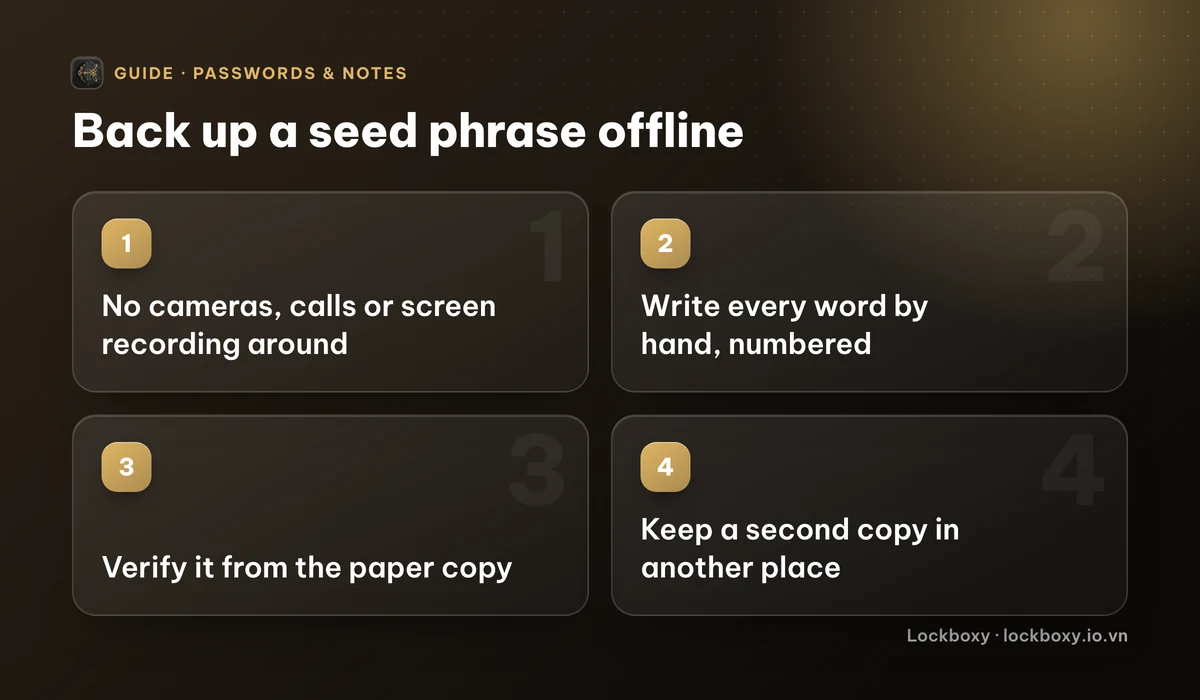
Do this once, carefully, when you create the wallet:
- 1Make sure nobody is around and no camera is pointed at your screen, including video calls and screen recording.
- 2Write the words by hand, in order and numbered, on paper. Use clear block letters and double-check spelling against the wallet's word list.
- 3Verify the backup: most wallets ask you to re-enter some words. Do it from your written copy, not from memory.
- 4Make a second copy and store it in a different physical location, so one fire, flood or move does not destroy both.
- 5For long-term storage, consider stamping or engraving the words on a metal plate made for this purpose; paper fades and burns.
- 6Keep the copies somewhere private and dry — a home safe or another secure place you control — and avoid labelling them in a way that announces what they are.
Where should I never store a seed phrase?
Most losses come from a copy that was convenient rather than safe:
- Screenshots and photos. They sync to cloud photo libraries, show up in search, and get shared by accident.
- Cloud notes, email drafts and documents. An account takeover exposes everything in them at once.
- Chat apps, including messages to yourself.
- Any website or form that asks for it. No legitimate wallet, exchange or support team ever needs your seed phrase. A pop-up, airdrop or “wallet validation” page that asks for it is a scam.
- Anyone who contacts you first offering help — by phone, chat or social media — even if they use an official-looking name or logo.
Is it ever reasonable to keep a digital copy?
Security guides from wallet makers generally say no, and offline storage remains the safer default. Some people still keep a digital copy, for example while travelling or as a third backup. If you do, be clear about the trade-off: any copy on a phone is only as safe as the phone and the app holding it.
If you choose that route, the minimum is a place that is encrypted, offline, protected by its own passcode, and not synced to a cloud account — never a screenshot, a plain note or a photo in your library. Treat it as an extra copy, never the only one.
The same thinking applies to other secrets on your phone; see how to store passwords safely on your phone and how to store ID photos safely.
How do I keep my phone from becoming the weak point?
- Use a 6-digit or alphanumeric iPhone passcode and keep software updated.
- On iPhone with iOS 17.3 or later, turn on Stolen Device Protection (Settings → Face ID & Passcode), which adds Face ID requirements and a security delay for sensitive changes when you are away from familiar places.
- Protect the email and Apple Account linked to your exchanges with two-factor authentication.
- Before handing the phone to a repair shop, read what to do before sending your iPhone for repair.
Where Lockboxy helps
Lockboxy is not a crypto wallet and cannot recover or move funds. What it offers is an encrypted place on your phone for the things around your crypto that you do need to keep: 2FA codes, exchange passwords, and — if you have decided to keep a digital copy — a seed phrase.
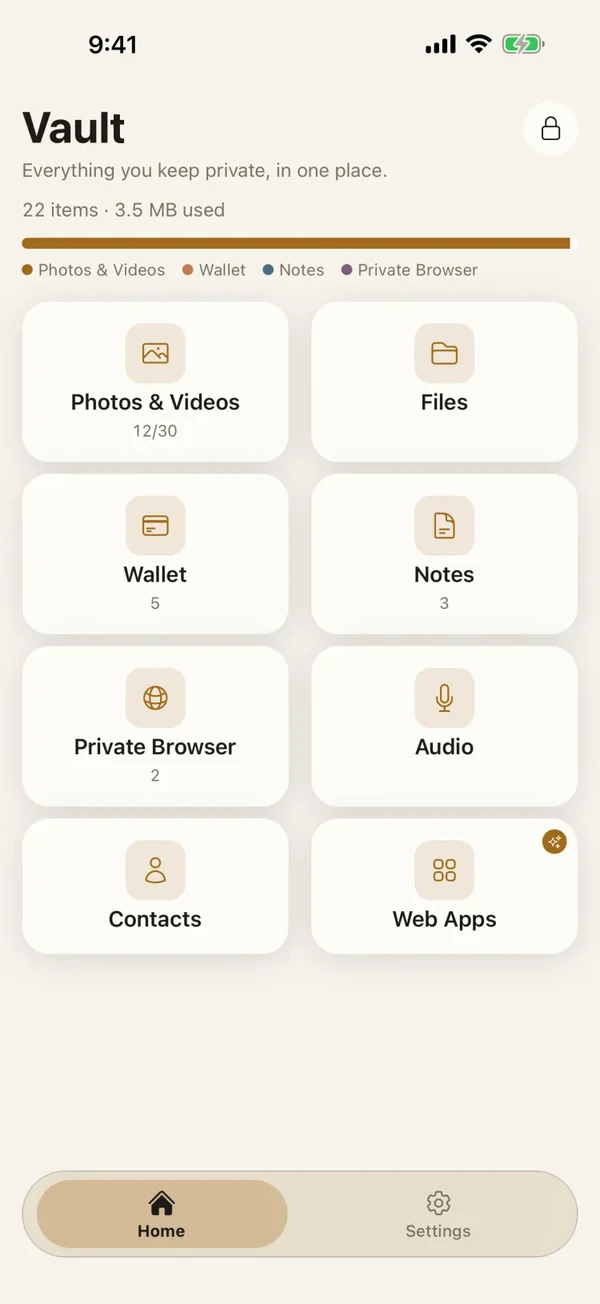
- The Wallet area has dedicated entries for crypto seed phrases, passwords and 2FA codes (a live code generator), and every field is encrypted individually.
- Everything is encrypted with AES-256 on the device, behind a passcode separate from your iPhone passcode. There is no account and no server, and the vault works offline.
- The vault hides its content from screenshots and the app switcher.
Keep the offline paper or metal copy as your primary backup either way. And remember the vault's own rule: if you forget the Lockboxy passcode and never created a Recovery Key (Premium), the content cannot be recovered by anyone. More details are in the FAQ.
Want a private place with its own passcode?
Lockboxy encrypts photos, videos, files and notes on your device, behind a passcode separate from your phone's. No account, no server.
Get Lockboxy on the App StoreMore guides
- How to store passwords safely on your phone
- How to store photos of your ID safely on your phone
- What to do before sending your iPhone for repair
- How to hide photos on iPhone (and what “hidden” really protects)
- How to lock apps on iPhone: Face ID lock, hiding apps and older-iOS workarounds
- How to permanently delete photos on iPhone (and every copy you forgot)
- How to lock notes on iPhone with a password or Face ID
- How to lend your iPhone without exposing your photos
- How to take photos that don't save to your iPhone camera roll
- How to scan documents on iPhone (no app needed) and store them safely
- How to store 2FA backup codes safely (and where not to)
- How to handle sensitive screenshots on iPhone (bank transfers, OTPs, IDs)
- How to keep voice recordings private on iPhone
- How to stop iPhone photos syncing to your iPad and Mac
- What to do when your iPhone is lost or stolen
- How to erase your iPhone before selling it
- Lockboxy vs the iPhone Hidden album: which should you use?
- Lockboxy vs locked notes on iPhone: which is better for private notes?
- Phone privacy for livestream sellers: keep customer data off the stream
- Keeping client documents private: a phone routine for real-estate agents
- How to hide contacts on iPhone: what really works
- How to tell if someone went through your iPhone
- How to move private photos to a new iPhone
- How to password protect a folder on iPhone
- How to remove location data from photos on iPhone before sharing
- How to store bank card details safely on your phone
- How to find and share a saved Wi-Fi password on iPhone
- How to stop unwanted photos from showing up in Memories and Featured Photos on iPhone
- How to control which photos an app can access on iPhone
- How to find the Hidden album on iPhone (and why it may be missing)
- How to show someone a photo on your iPhone without them swiping to the others
- How to stop WhatsApp saving photos to your iPhone camera roll
- How to stop photos from Messages showing up in your iPhone Photos app
- How to password protect a video on iPhone
- How to password protect a PDF on iPhone
- What does Private Browsing on iPhone actually hide?
- Where do downloads go on iPhone? How to find, move and delete them
- How to hide private content in the iPhone App Switcher
- How to back up your iPhone photos without iCloud
- How to stop photos from showing up in iPhone Spotlight search
- What can someone do with your locked iPhone? How to limit Lock Screen access
- Why is there a green or orange dot on my iPhone? How to see which app is using your camera or microphone
- How to keep a private journal on iPhone
- How to stop unwanted AirDrops on iPhone
- How to keep medical documents and insurance cards private on iPhone
- How to change or remove the camera button on the iPhone Lock Screen
- Forgot the passcode of your private photo vault app? What you can and can't recover
- What happens to your iPhone photos and private data when you die? How to set up a Legacy Contact
- You copied a password on iPhone: who can see your clipboard, and how to stop apps pasting from it
- What is Stolen Device Protection on iPhone, and should you turn it on?
- Where to store PIN codes and door codes on iPhone
- How to share a password with family on iPhone without sending it in a chat
- Where to store your Apple Account recovery key (and what if you lose it)
- How to see saved passwords on iPhone (and what to do when one is missing)
Questions about how Lockboxy works? Read the FAQ